Posts

Showing posts with the label Reading

Reading Notes: The Iliad of the East, Part A

Image
Notes taken from " The Iliad of the East " by Frederika Richardson. How Valmiki Received the Gift of Poesy I always wondered why Valmiki was credited with writing the Ramayana, and I'm glad someone was able to provide a bit of background. Valmiki decided to leave society and go into isolation in the forest, not because of dissatisfaction, but to obtain an unbiased, clear vision. It reminds me of the Biblical stories of Jesus, where when he was surrounded by the crowds, would always withdraw from the crowds to spend time with the Father and pray. While in isolation, he contemplates the state of man; specifically, on if there's anyone who displays an unblemished virtue of heroism that will elevate mankind. Narada, the messenger of the gods appears and joins the discussion, and tests him a bit, trying to cause him to doubt mankind but Valmiki remains resolute (yet meek) in his belief. So Narada reveals that there is in fact a human that exists such as this - Rama, s...

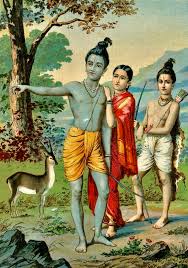
Reading Notes: The Divine Archer, Part B

Image
Notes taken based on " The Divine Archer " by F. J. Gould in 1911. Part B begins after Sita is taken away by Ravana, due to some...questionable decisions by both Rama and Lakshmana. Rama gets distracted by a golden deer, then Lakshmana doesn't have the faith in his brother (who is supposedly the best warrior in the universe or something?) to realize that he will be okay on his own and leaves his post of guarding Sita. The valiant king of the vultures, Jatayu, gives up his life trying to get Sita back, but fails. And dies. But not before he tells Rama and Lakshmana what happened. Also, Hanuman. Section 7 The party finds out that Sita is in Lanka, so Hanuman jumps there and scouts it out. He finds Ravana's brother, Vibhishana, who, because he was like, "Yo, return Sita man. I don't want no war with Rama," was not on good terms with Ravana. Vibhishana tells Hanuman where Sita is so Hanuman goes there and gives Sita Rama's ring. He then tears up...

Reading Notes: The Divine Archer, Part A

Image
Notes taken based on " The Divine Archer " by F. J. Gould in 1911. I appreciate prose versions of texts. It always seems like I never get a fully adequate understanding on my first read through of the original version. It's on the second read through of a different version that helps fill in the gaps. Rama and Lakshmana taken from Wikipedia Section 1  The Divine Archer The birth of Rama...it feels like so long ago that we began this journey through the Ramayana. And here we are again. The gods are overjoyed and everyone is happy due to Rama's birth. And of course, the scene with Kaushalya, seeing her baby transform into a cosmic being for an instant. But of course, this is just normal for a mother, right? A mother always sees greatness in her son. Rama and Lakshmana - name a more iconic duo. I always enjoy reading about the two brother's adventures because they're so loyal to each other. Section 2 Rama and Sita meet, and it's love at first...

Reading Notes: The Five Brothers, Part B

Image
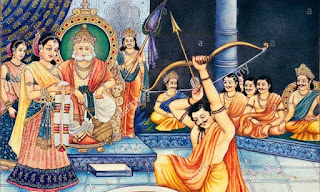
Notes taken from  "The Five Brothers: The Story of the Mahabharata"  by Elizabeth Seeger. I feel like this extra detail could be a story project for this class! I could see it on a portfolio or storybook that explores the "behind-the-scenes" of the Mahabharata. The Bridal Choice The king of Panchala is holding a tournament for the hand of his daughter - it's her swayamvara, or bridal choice. The Pandavas, hearing about it (and Draupadi's exceeding beauty) pretty much begin to swoon over her, and decide to go to this tournament. The challenge, of course, is nearly impossible, set with exactly one person in mind that could finish it and marry the king's daughter - Arjuna, the third son of Kunti. The king of Panchala wanted none other to marry his daughter. Karna, the mad lad, does it with ease, however, but before he can finish, Draupadi rejects him because of his low birth. Poor Karna. He is able to do everything Arjuna can but because of his social ...

Reading Notes: The Five Brothers, Part A

Image
Notes taken from "The Five Brothers: The Story of the Mahabharata" by Elizabeth Seeger. Sons of Pandu I love reading a story, then finding out the backstory behind the main characters, and this is what Seeger's story does. It takes the backstory of the Pandavas, from when they first arrived in Hastinapura, and provides more detail and imagery than what was provided in the Mahabharata. For example, in the Mahabharata, it doesn't mention the Pandavas noticing the four different castes present in the kingdom. It also provides more details about the poisoning of Bima by the jealous Duryodana (spoiled much?), the meeting of Drona and his skill/accomplishments, and how Arjuna is not one to be taken lightly - he's actually pretty awesome. (Drona's test, taken from Kidsgen ) The Tournament In the Mahabharata, I always viewed Karna as a kind of rebellious challenger, but with the explanation given in this story, it seems he has every right to challenge ...

Reading Notes: Babbitt Jataka Tales, Part A

Image
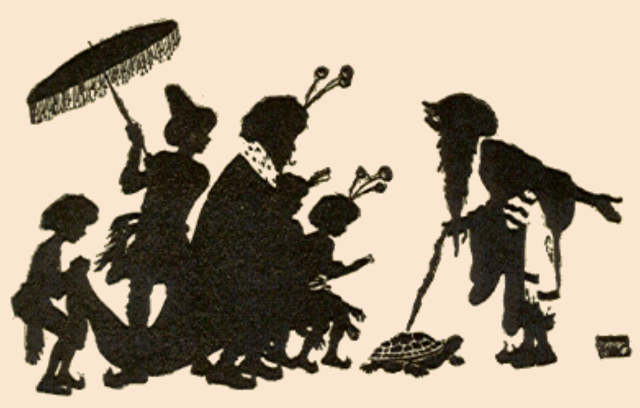
These were taken from the  Jataka Tales , by Ellen C. Babbitt in 1912. (undecided on how to kill a turtle, from Jataka Tales ) How the Turtle Saved His Own Life I think all these should have a moral, but I'm not sure what this one's could be...A turtle uses his cunning to escape a (less than intelligent) king and his men. The boys are so wimpy that they run away from a harmless thing they've never seen before. They don't even consider it might be completely harmless! It's a turtle. But their even wimpier father doesn't correct his sons but tries to appease them by ordering it to be killed. Fortunately, they are all so dumb that they can't decide on how to kill it. One suggestion was to throw it into the water where it will drown, to which the turtle acts dreadfully scared, and thus he escapes. I just...I don't even know. Is the moral supposed to be: "don't be as ignorant as the king/his kingdom"? The Turtle Who Couldn't Stop ...

Reading Notes: Babbitt Jataka Tales, Part B

Image
These were taken from the Jataka Tales , by Ellen C. Babbitt in 1912. The Wise and Foolish Merchant Ah, the classic juxtaposition of a wise and foolish man that ends with a moral - don't throw away your future because of a temporary enjoyment. This is pretty pertinent for college students (cough, cough me). The Elephant Girly-Face What a strange name...kind of demeaning, if you ask me. Like the previous story, we see another moral: evil companionships corrupt good morals, as it says in 1 Corinthians 15:33 in the Bible. The story may seem a little exaggerated, but it's definitely true. We're all Girly-face - susceptible to peer pressure. (Two cows noticing the pig's choice food, from Jataka Tales ) The Ox Who Envied the Pig A story about not being jealous of other people's fortune, I think. Two cows are wondering why the pig is getting all the good food while they're getting just straw and grass. Unfortunately (or fortunately for the cows, I g...

Reading Notes: Epified Krishna Series, Part A

Image
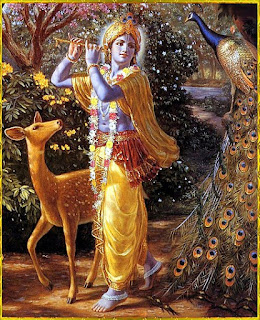
Taken from the Epified Krishna series, on Youtube . (Krishna playing the flute, from Wikipedia ) I always enjoyed the short, concise format of the Epified series, and the one on Krishna is no different. I love the calm atmosphere the narration and the background music provides. My thoughts on Krishna are...mixed. He was basically the one who instigated the war in the Mahabharata. I mean, I get that he's an avatar of Vishnu, but still, does that mean he can treat mankind as his plaything? Apparently so, as in the Mahabharata. Poor Devaki. Every child she had was smashed against a wall. In prison. I love the story of Krishna eating mud. When his mother gets angry with him and tells him to open his mouth, she sees the universe in Krishna's mouth. Of course, the vastness of it nearly breaks her mind, but she's brought back to reality by the realization that her son, though a Brahmand, is still just a child. The humanity balances her. Sorry, I appreciate Krishna ...

Reading Notes: PDE Mahabharata, Part B

Image
This is from the public domain edition of the Mahabharata, by Vyasa . Because I missed this part of the reading last week, I am making it up now. The House of Fire Not sure how well thought out the plan was to soak a palace in oil.  It would be pretty obvious, I think. Everything would be slippery, there would be an oily smell in the air... Also, how convenient was it that there happened to be a woman with five sons that came by? Poor woman though. Burned alive in her sleep. At least they died with full stomachs. Bhima and Hidimba Ah! A rakshasi who falls in love with Bhima and refuses to kill him. It's like the plot of one of my stories, Savanad , but in my story, Savanad is a rakshasa who wants a human female as a mate. But still, I think it would be cool to explore this possibility further - certain subsets of beings that defy the expectations of their own race. It IS possible for a rakshasa to be good. There's nothing that stops them from transforming into a human...

Reading Notes: PDE Mahabharata, Part D

Image
Taken from  The Mahabharata, A Summary   by John Mandeville Macfie. 61. Bhishma Falls Poor Bhishma. They got swept up in their emotion, but at the end of the day, death is death. And the death caused by members of your own family - what can be more cruel? I guess this is the fulfillment of Amba's threat/curse/promise? Because she blamed him for her not being able to marry anyone, at the beginning of the story. 64. Ghatotkhacha Another son dies. Who's next? 65. Death of Drona It's Drona, but only because the Pandavas tricked him into believing his son had been slain. Controversial! His son was the only reason he continued to hold on to life. The irony makes his death all the more sad. What will his son think? He doesn't even know his father is dead. We met Drona in the beginning of the story; he acted as a tutor and mentor to the Pandavas and the Kauravas, and now, he dies at their hands. Terrible. 67. Arjuna and Karna This is the supposedly the climax of t...

Reading Notes: PDE Mahabharata, Part C

Image
Taken from  The Mahabharata, A Summary   by John Mandeville Macfie. 42. Krishna's Visit A very interesting difference in attitudes from the Ramayana. In the Ramayana, Sita unquestioningly and loyally follows Rama, without a single complaint. Draupadi, on the other hand, is so moved with anger that she even questions the gods. Surprisingly, Bhima takes Draupadi's side, for Yudhishthira to take action and take back his kingdom, but Yudhishthira, as Rama did, is more prudent toward the keeping of his word than his position. The Mahabharata seems more...human than the Ramayana. I mean, yes, I get that Rama was the incarnation of Vishnu, so he's the "most righteous and upright, etc." but I feel as if the things he did/put up with were pretty unreasonable as a man. And the way he responded to them made him seem completely inhuman, which gives the reader nothing to connect to. In the Mahabharata, however, the reader can empathize with Draupadi, and have probably gon...

Reading Notes: PDE Mahabharata, Part A

Image
Taken from The Mahabharata, A Summary by John Mandeville Macfie. The illustrations for the Mahabharata are a lot more detailed than the ones for Ramayana. The Ramayana's were more flat and primitive, but the Mahabharata's have depth, shading, expressions, etc. that make it more interesting (in my opinion) to look at. Similar to how Valmiki was the author in the Ramayana (and also a character!), a guy named Vyasa is credited with writing the Mahabharata. From the wording though, it seems like he'll have a larger part to play than Valmiki did in his story. (King Shanatu and a beautiful woman on the Ganga, from Wikipedia ) King Shanatu and Ganga Aha! So this is where that story of Ganga throwing babies into the river comes from! And there's some justification behind it as well - the babies are actually celestial beings that have been cursed to have a human form. They went to Ganga to ask her to be their human mother, where she promised to throw them into the r...

Reading Notes: Nivedita Ramayana, Part B

Image
Again, I am impressed by Nivedita's attention to detail, in comparison with the PDE. The PDE, in regards to Rama needing to cross the ocean, made him seem very childish; it was as if he were throwing a tantrum and the exasperated Ocean finally just gave him what he wanted. In Nivedita's version, however, though he is still seemingly angry, he is more rational and doesn't actually want to dry up the sea. It also gives details about the actual construction of the bridge, providing somewhat of a timeline to the story. Vibhishana's abandoning of Ravana is also given in slightly more detail than I remember. It touches his anger at being constantly ignored/insulted for trying to warn his brother about not standing a chance against Rama. Even just one extra line that shows some kind of insight into what the characters are feeling provides more immersion in the story and gives the reader a satisfaction in progressing with them as they develop. For example, the line (present i...

Reading Notes: Nivedita Ramayana, Part A

Image
Thoughts taken on the Nivdeita's Ramayana. I liked the PDE Ramayana, but I felt like the events and situations the characters went through didn't have much impact because we didn't have a real connection with the characters; they weren't fleshed out enough, leaving us (or me, at least) to wonder why a certain character acted a certain way, or why an event came up, seemingly randomly. Nivedita's Ramayana solves this issue for me. She provides much more background information on the characters introduced. For example, in her description of Kaikeyi and her interaction with Manthara, the backstory of how King Dasharatha had come into Kaiyeki's debt, and consequently, her ability to blackmail him because of it. The resulting conversation between Dasharatha and Kaiyeki is also more detailed, giving the reader more insight into how grieved Dasharatha was at having to banish his heir-apparent. The exposition and level of detail in the beginning regarding Valmiki and ...

Reading Notes: PDE Ramayana, Part D

Image
These notes were taken as I was reading through the Public Domain Edition of the Ramayana, by Valmiki. The Bridge Okay, so let me get this straight. Rama, because he wants to get his wife back, had to cross an ocean to get there, but when his offering to the God of the Ocean failed, he basically threw a tantrum. The thing is, his tantrums aren't like your toddler's; when he throws one, it has a global impact. On top of that, he threatens to dry up the sea.  I mean, I'm no marine ecologist or anything, but that seems like a VERY serious threat, not only because of the impact on life, but because of that fact that he can do it on a whim. I feel like he should have more responsibility, especially knowing his power. Indrajit Ah, so this is where the story of "Hanuman Saves the Day" comes from, maybe? Where he flies off to find an herb to revive the dying/dead Lakshmana, but then, because he can't find the herb, decides to just bring back the entire mo...

Reading Notes: PDE Ramayana, Part C

Image
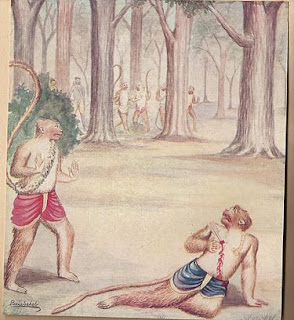
This week, I'm only writing on the parts that stood out to me, because Hanuman, the monkey himself, has arrived. But as before, I'm taking down my notes as I'm reading through, to get my immediate thoughts. And as before, this is from the PDE Ramayana  by Valmiki. It seems like Vali is...kind of justified? He was fighting a beast in a hole, but instead of helping him, Sugriva just watched...for a year, then closed the hole with a mountain.  Surely if he was that strong, he could have just gone into the hole and helped Vali. I can see Vali's point of view, and to me, it seems a little more righteous. If I had barely escaped a life-or-death situation, found a mountaintop blocking my way out, broke through that, all to find that my brother was now ruling over my kingdom, I mean, yeah I would be angry, too! Even though his wife pleaded for him not to fight because of Rama, a man has his pride, you know? (killing of Vali, from Wikipedia ) Hmm...I'm not sure how ...

Reading Notes: PDE Ramayana, Part B

Image
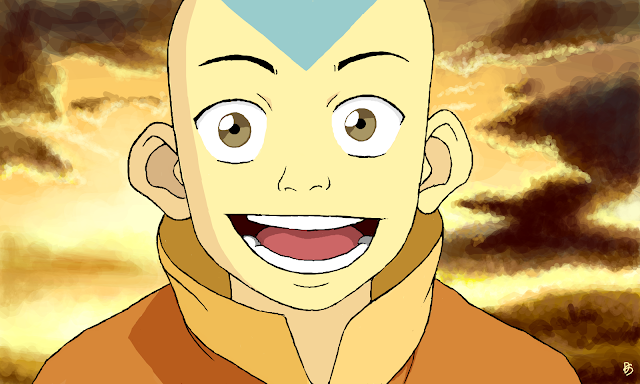
From the Public Domain Edition of the Ramayana , by Valmiki. Notes/thoughts taken in real time, as I was reading through. (Avatar Aang, sketched by DontSpeakSilent on Sketchport ) Good man, Bharata. It's always satisfying to see justice delivered, especially when it also portrays not just revenge. It is a good way to make the character really likable. How can you dislike someone who, despite burning with righteous anger, doesn't let the anger go to his head and go on an execution spree, but instead, knowing his place, chooses to do what's right? Though he technically could just assume the throne because he technically had the right, he chose instead to right the wrongs that his mother committed. A good character building strategy to make that character liked by the reader. I'm also impressed by Rama's loyalty to his father, King Dasharatha. Even with the news that the king is dead, and the urging of the king's counselor to take the throne, he instead ...

Reading Notes: PDE Ramayana, Part A

Image
From the Public Domain Edition of the Ramayana , by Valmiki. Note: these comments were taken in real time, as I was reading through. (Asgard, conceptual; taken from Flickr ) The introductory descriptions of King Dasharatha and Koshala (Kosala?) reminded me of Asgard, especially as depicted in the Marvel Cinematic Universe (MCU). Towering palaces, decorated temples, just a scene that inspires awe. And sitting on top of it all, a king. In the MCU, and in Norse mythology in general, this was Odin. After the Ashwamedha, it describes a grand oblation that several of the major Hindu gods attend. It seems like Indian mythology is quite influential and has pervaded other modern cultures, especially in Japanese culture, to my surprise. For example, Indra is depicted as the elder brother of Asura, both of whom are sons of a great sage in the manga, Naruto. The two are bitter rivals, and their rivalry, passed down through the generations, could be seen as a type of the rivalry the gods...

Reading Notes: The Crocodile and the Monkey

Image
The Crocodile and the Monkey's Heart from Eastern Stories and Legends by Marie L. Shedlock. The Crocodile in the River, from Vanarinda Jataka, in The Jataka: Volume 1 translated by Robert Chalmers. Both of these stories are similar; they involve a crocodile being outwitted by a monkey, who is one of the incarnations of the Buddha in a past life. It seems like the crocodile is always portrayed as...exceedingly unintelligent, to put it lightly. He believes the monkey speaks to a rock regularly, and that his heart is hidden up in a tree because it would fall out with all his swinging. I think I've tried something similar on one of my 5-year old cousins. And even he didn't fall for it. However, it's not entirely the crocodile's fault. The spurring on of his wife reminds me of the Biblical story of Adam and Eve. Because of her persuasion, the crocodile does something he didn't wish to do, just as Adam partook of the wrong fruit because of persuasion ...

Week 2 Reading Overview

Image
The real focus of the class begins here, on Week 2. I chose to read the PDE Ramayana. I feel the older style fits better for such a story and the various authors' tones makes it seem as if it were being told around a campfire or something. A classic retelling from the styles of different authors, it's almost as I were going around from town to town in India and hearing the same story from different tellers. Plus, it's free.  Going in as a complete beginner to Indian literature and stories, in order to get some kind of background, some comic books and videos were provided for our perusal. Here are a couple of each I found interesting and my thoughts on them. Comic Books: Ancestors of Rama: A Noble Inheritance Rama is a central figure in the Ramayana, but I know nothing about him, so I thought it would be good to get an idea of where he came from. Thus, I stumbled upon this comic book, which goes back to Rama's great-great-grandfather (four generations!) a...